Introduction:
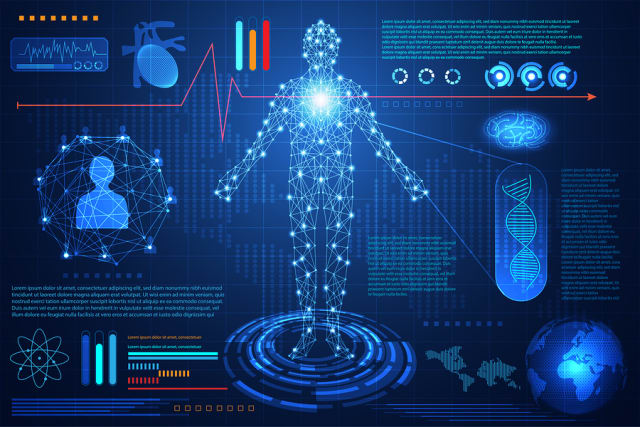
Artificial Intelligence (AI) has made a major impact across a myriad of industries, especially in healthcare. This trending technology that was only a dream once is not so anymore. We have never imagined how this evolving technology has become a part of our daily lives The use of AI in the healthcare industry is radically changing the face of the IT industry. In recent years, the integration of artificial intelligence (AI) in healthcare has brought about transformative changes that are reshaping the landscape of medical diagnosis, treatment, and research. This convergence of technology and medicine holds immense potential to enhance patient care, improve efficiency, and revolutionize the way healthcare is delivered. This blog on the AI in healthcare discusses various uses of Artificial Intelligence in this industry.
Use of AI in healthcare:
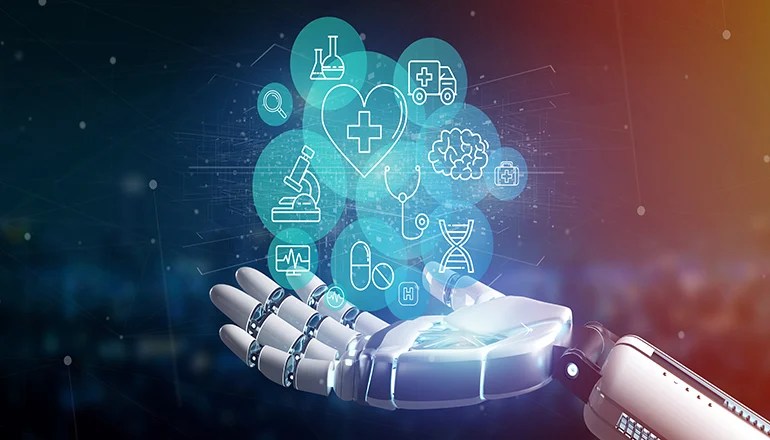
AI’s applications in healthcare are as diverse as they are promising. From streamlining administrative tasks and managing patient data to aiding in complex medical procedures, AI in healthcare is making a significant impact. One prominent application is in medical imaging, where AI algorithms can analyze images with remarkable accuracy, assisting doctors in detecting abnormalities such as tumors or fractures.
AI has revolutionized health research by enabling the analysis of massive datasets, identifying patterns, and generating insights that were previously inaccessible. Researchers can now mine vast amounts of medical records, genetic data, and scientific literature to uncover potential correlations and contribute to advancements in personalized medicine.
AI Algorithms in Healthcare:
AI algorithms, fueled by machine learning techniques, have the ability to learn from data and adapt over time. In healthcare, these algorithms can be trained on diverse medical cases to assist in tasks ranging from medical image analysis to predicting disease outcomes. This continuous learning process allows AI systems to improve their accuracy and effectiveness as they encounter new scenarios. By inputting data about a patient’s condition, medical history, and other factors, medical algorithms can generate predictions about how that patient is likely to respond to different treatments. This can help researchers choose the most effective treatment for each individual patient.
AI tools for medical diagnosis :
AI tools for medical diagnosis have emerged as revolutionary assets in the healthcare landscape. Leveraging machine learning algorithms, these tools excel at analyzing complex medical data, such as images from X-rays, MRIs, and CT scans. By swiftly and accurately detecting anomalies that might be overlooked by human eyes, AI enhances the diagnostic process, reducing the chances of errors and enabling faster, more precise identification of conditions. This technology not only aids healthcare professionals in making more informed decisions but also contributes to improved patient outcomes.
Google AI for medical diagnosis:
Google’s Artificial Intelligence (AI) breakthrough in medical diagnostics has sparked a major upheaval, offering a revolutionary single eye scan that predicts cardiovascular events. This cutting-edge technology has the power to transform traditional diagnostic approaches such as CT scans, MRIs, and X-rays. This innovative platform is a result of Google’s collaboration with OpenAI, uniting unparalleled expertise. With Google AI search capabilities, Lambda goes beyond traditional methods, offering deep insights into medical data analysis. From recognizing intricate patterns to predicting complex conditions, Google’s Lambda AI tool empowers healthcare professionals with precise diagnostic information.
Advantages and disadvantages of AI in healthcare:
The integration of artificial intelligence (AI) in healthcare brings forth a host of advantages and disadvantages that shape the future of medical practice. On the advantageous side, AI accelerates diagnostics with unparalleled speed and accuracy, aiding clinicians in early disease detection and treatment planning. It empowers personalized patient care by analyzing vast datasets to formulate treatment strategies, enhancing treatment effectiveness. AI streamlines administrative tasks, reducing the burden on healthcare staff and allowing them to allocate more time to patient care.
However, alongside these benefits come challenges. Concerns over data privacy and security arise as AI systems handle sensitive patient information. Overreliance on AI without adequate human oversight may result in critical errors, emphasizing the importance of involving healthcare professionals in final clinical decisions. Implementing AI within existing healthcare systems can be intricate and resource-intensive. There’s a risk of reduced patient-doctor interaction as AI streamlines processes.
Future of AI in Healthcare:
AI is set to play an instrumental role in revolutionizing diagnostics, treatment, and patient outcomes. The synergy between AI and healthcare will see the integration of machine learning techniques in various medical processes, redefining how diseases are detected and managed. AI’s potential extends to natural language processing (NLP) in healthcare, enhancing the extraction of insights from vast volumes of medical data and scientific literature. With AI’s capacity to predict disease outcomes and recommend personalized treatments, the healthcare landscape will undoubtedly witness more precise, patient-centric approaches. As we step into the era of AI-powered healthcare, it’s evident that the fusion of AI and the medical domain will shape a future.
Examples:
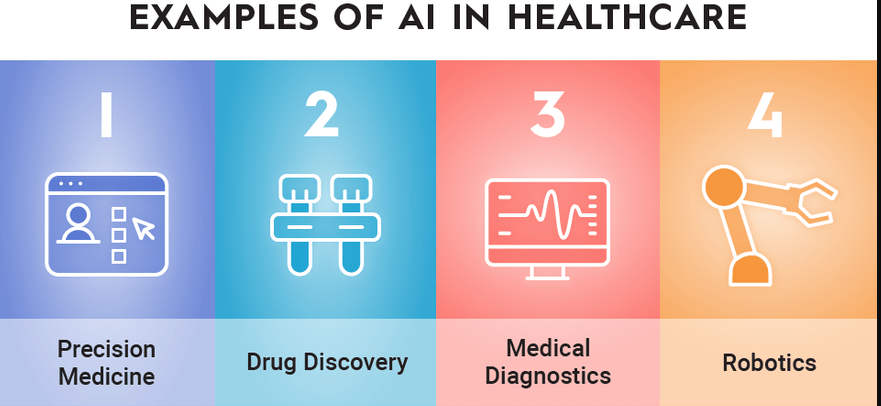
AI’s applications in healthcare are versatile and far-reaching, offering a glimpse into a future where medical practices are enhanced, diagnoses are expedited, and patient outcomes are improved.
1. Medical Imaging Analysis:
AI has made profound strides in medical imaging interpretation. It can swiftly analyze vast amounts of images from X-rays, MRIs, and CT scans, accurately identifying anomalies that may be challenging for human clinicians to detect. This capability expedites the diagnosis process, leading to more timely treatments and improved patient outcomes.
2. Personalized Treatment Recommendations:
AI-powered systems can assess large volumes of patient data, including medical history, genetic information, and treatment responses. This allows for the development of personalized treatment plans tailored to each patient’s unique characteristics. Such precise recommendations increase treatment efficacy while minimizing potential side effects.
3. Drug Discovery and Development:
AI has revolutionized the drug discovery process by sifting through massive datasets to identify potential drug candidates. Machine learning algorithms predict how new compounds might interact with biological systems, accelerating the identification of promising candidates. The unique benefit of Artificial Intelligence technology allows healthcare professionals to scan pre-existing medicines and use them to redesign medication in a way that allows them to fight against specific diseases. This makes it cheaper to develop new drugs.
4. Predictive Analytics for Disease Outcomes:
AI algorithms analyze patient data to predict disease progression and outcomes. By considering a multitude of variables, such as genetics, lifestyle factors, and medical history, AI can assist healthcare providers in identifying high-risk patients and intervening proactively to prevent or manage conditions effectively.
With increased accuracy in the diagnosis of various diseases, most of them can be looked after or be cured at a stage where it does not turn fatal, saving numerous lives.
5. Virtual Health Assistants:
Virtual health assistants powered by AI provide patients with real-time information, medication reminders, and even basic health assessments. These assistants enhance patient engagement and education, helping individuals take a more active role in managing their health.
6. Robotic Surgery:
AI-enabled robots are enhancing surgical precision and capabilities. Surgeons can use robotic systems to perform minimally invasive procedures with greater accuracy, reduced invasiveness, and shorter recovery times, ultimately improving patient outcomes. This allows surgeons to sit at the console of a computer and control the robot’s mechanical arms, while the robot offers a magnified, 3-dimensional view of the surgical site that is impossible to look at with their own eyes.
7. NLP in Healthcare:
Medical NLP is used in the healthcare industry by a wide range of healthcare professionals, including physicians, nurses, pharmacists, and administrators. NLP algorithms can analyze vast amounts of medical records, extracting valuable insights and trends that might otherwise remain hidden. This technology streamlines administrative tasks and enables healthcare providers to make data-driven decisions.
Conclusion:
In conclusion, the integration of artificial intelligence (AI) in healthcare represents an unprecedented leap forward in medical technology. While showcasing remarkable potential to enhance diagnostics, personalized treatment, and administrative efficiency, AI’s journey in healthcare is not without its challenges. Striking the right balance between leveraging AI’s capabilities and addressing concerns such as data privacy, algorithm bias, and ethical considerations is paramount. The collaboration between human expertise and AI’s computational power holds the key to unlocking a future where patient care is more precise, accessible, and effective.

 AI Hub
Leave a comment