Introduction:
In a world brimming with technological advancements, the realm of robotics and AI has captured our imaginations like never before. As we gaze into the future, we envision a landscape where robots seamlessly collaborate with humans, transforming industries, healthcare, education, and even our daily lives. Let’s dive into the horizon of possibilities and uncover the intriguing journey that lies ahead for AI robotics.
Evolution of Robotics and AI:
The concept of robots has evolved from mere mechanical automatons to sophisticated, AI-driven entities. As we approach 2050, the notion of “futuristic robots” takes on new dimensions, bringing to mind autonomous machines that effortlessly navigate our surroundings. Thanks to “future robotics technology,” these machines are not only intelligent but also adaptable, capable of learning and improving with each interaction.
Redefining Industries and Work:
One of the most compelling facets of the “future of work robots, AI, and automation” is its impact on industries. Renowned author Martin Ford, in his book “Rise of the Robots,” explores how automation is reshaping economies and labor markets. Industries like manufacturing and agriculture are poised to be revolutionized by robotics. “The future of robotic agriculture” envisions automated processes that optimize crop yield and reduce environmental impact, addressing the global challenge of food security.
Use of AI in Robotics:
AI’s integration into robotics has revolutionized the field, offering an array of capabilities that were once the stuff of science fiction.
1. Firstly, AI enhances perception by enabling robots to interpret and make sense of their surroundings through sensors and cameras. This allows robots to navigate complex environments with precision, making them well-suited for tasks like autonomous driving and exploration.
2. Secondly, AI-driven robots exhibit advanced decision-making abilities. They can process vast amounts of data in real-time, adapting to changing circumstances and making informed choices, whether in manufacturing, healthcare, or agriculture.
3.Thirdly, AI empowers robots with learning and adaptation. Through machine learning algorithms, robots can refine their actions based on experience, optimizing performance over time.
Finally, AI facilitates human-robot interaction, enabling robots to understand and respond to natural language, gestures, and emotions, making them valuable in sectors like customer service and education. This convergence of AI and robotics amplifies the potential of machines, reshaping industries and augmenting human capabilities in ways previously unimaginable.
Creating AI Robot:

Creating an AI robot involves a combination of various skills, disciplines, and technologies. Here’s a high-level overview of the steps to guide you through the process:
1. Define the Purpose and Design:
Clearly outline the purpose and function of your AI robot. Determine whether it will perform specific tasks, assist with daily activities, or have a more general-purpose role. Sketch out the robot’s physical design, considering factors like size, shape, and mobility.
2. Select Hardware Components:
Choose the hardware components that align with your robot’s design and purpose. This could include motors, sensors (such as cameras, ultrasonic sensors, and gyroscopes), microcontrollers, actuators, and power sources.
3. Choose Software and Programming:
Decide on the programming language and software framework you’ll use to develop the robot’s AI capabilities. Python, C++, and ROS (Robot Operating System) are popular choices. Develop algorithms for perception, decision-making, and control.
4. Implement Perception Abilities:
Integrate sensors to enable the robot to perceive its environment. Depending on your robot’s purpose, you might incorporate vision processing (object recognition, tracking), depth sensing, or even speech recognition.
5. Develop Decision-Making Algorithms:
Implement AI algorithms to process the sensory input and make informed decisions. Machine learning techniques like neural networks can be used for complex tasks such as image recognition and natural language understanding.
6. Programming Movement and Control:
Program the robot’s movements and control mechanisms. This involves translating decisions into motor actions. Develop algorithms for navigation, obstacle avoidance, and manipulation.
7. Testing and Iteration:
Test each component and the robot as a whole. Identify and address any issues or inefficiencies in the robot’s behavior, refining the algorithms and code as needed.
8. Human-Robot Interaction:
If your robot interacts with humans, implement interfaces for communication. This could involve integrating speech synthesis and recognition, gesture interpretation, and touch interfaces.
9. Safety and Ethical Considerations:
Ensure the robot’s design and behavior adhere to safety standards and ethical considerations. This is especially important if the robot will be used in environments with humans.
10. Deployment and Continuous Improvement:
Once your robot meets your desired functionality and performance, deploy it in its intended environment. Collect user feedback and data to further refine the robot’s AI capabilities over time.
Remember that creating an AI robot is a multidisciplinary endeavor that requires expertise in areas like robotics, programming, AI, and engineering. Depending on the complexity of your project, you might need a team with diverse skills to bring your AI robot to life.
Imprtance of AI in robotics:
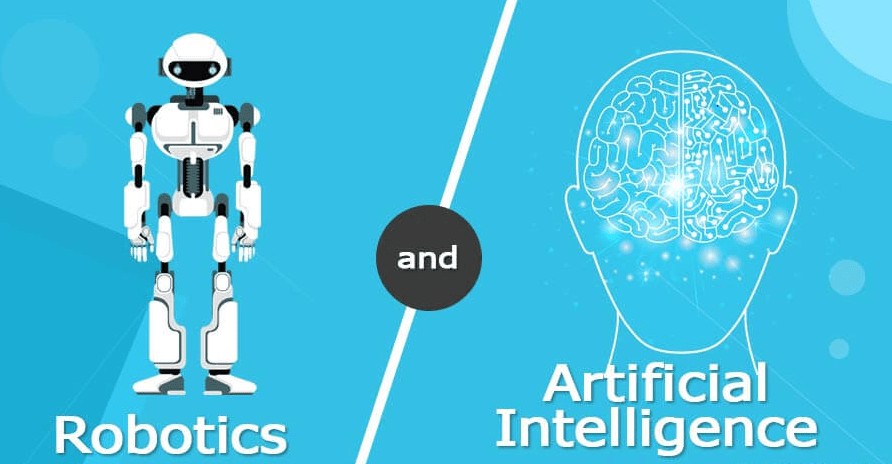
The significance of AI in robotics cannot be overstated, as it represents a groundbreaking convergence that amplifies the capabilities of both fields. AI provides robots with the cognitive prowess to interpret and respond intelligently to their surroundings, transforming them from mere machines into adaptable, perceptive entities. This infusion of AI allows robots to navigate complex environments, make informed decisions in real-time, learn from experience, and even interact with humans in natural ways. The result is a new generation of robots capable of performing tasks that were once deemed beyond their reach, from autonomously driving vehicles to assisting in surgeries. AI-driven robotics not only enhances efficiency and productivity across industries but also opens doors to innovation in sectors like healthcare, manufacturing, and exploration. Ultimately, the fusion of AI and robotics is propelling us toward a future where machines work in tandem with humans, augmenting our capabilities and reshaping the way we interact with technology.
Example of AI in robotics:
An exemplary illustration of AI in robotics is Boston Dynamics creation of humanoid and quadrupedal robots. These robots, such as the famous “Spot” robot, showcase the seamless integration of artificial intelligence and advanced mechanical design. Equipped with sensors, cameras, and AI algorithms, these robots possess remarkable agility and adaptability. They can traverse complex terrains, maintain balance, and even respond intelligently to dynamic environments. By combining AI’s ability to process data and make informed decisions with the mechanical prowess of these robots, Boston Dynamics exemplifies how AI can enhance robotic capabilities, enabling them to perform tasks that were once deemed too intricate for machines. This convergence of AI and robotics opens up a world of possibilities, from industrial automation to search and rescue operations, redefining our expectations of what machines can achieve.
Applications of AI robots:
AI robots are poised to revolutionize an array of industries and domains, showcasing their transformative potential through a diverse range of applications. In manufacturing, these robots optimize efficiency by executing intricate tasks with unparalleled precision, streamlining production lines and reducing human error. In healthcare, they perform surgeries with exceptional accuracy, assist in rehabilitation, and enable telemedicine, expanding access to expert care. The agricultural sector benefits from AI robots by automating planting, harvesting, and monitoring, thereby increasing crop yield and sustainability. Educational settings witness their integration as interactive tutors, personalizing learning experiences and fostering engagement. In Disaster-stricken areas, AI robots are seen aiding search and rescue missions, navigating hazardous environments with ease. Moreover, retail and customer service sectors employ AI robots to offer personalized assistance and seamless interactions. From space exploration to environmental monitoring, from logistics to entertainment, the applications of AI robots span an incredible spectrum, reshaping industries and enriching our lives in ways that were once unimaginable.
Future of AI robots:
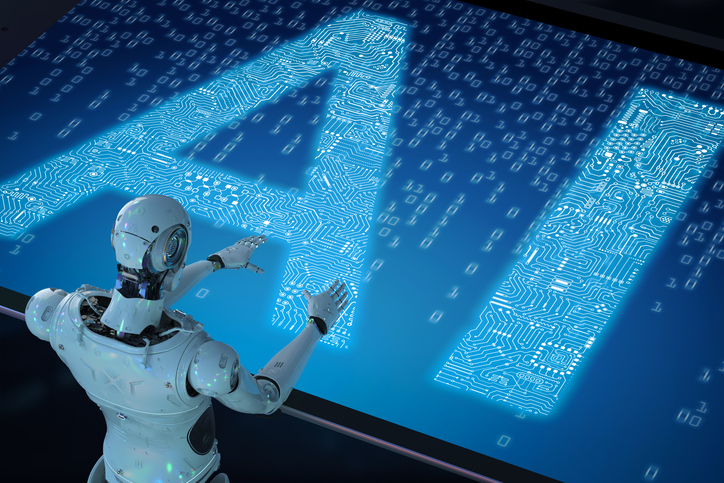
The future of AI robots is a horizon that teems with innovation, unlocking possibilities that were once relegated to the realm of science fiction. As artificial intelligence continues to advance, robots are poised to become even more sophisticated, capable of seamlessly integrating into our lives. The dawn of AI robots promises a world where machines not only understand and respond to human emotions but also anticipate our needs and preferences. These robots will possess an unprecedented level of adaptability, learning from every interaction and growing more proficient over time. Industries will witness a paradigm shift, as AI robots take on complex tasks, improving efficiency and transforming the workforce landscape. From homes to hospitals, factories to fields, the future envisions AI robots as indispensable collaborators, amplifying human capabilities and addressing challenges on a global scale. As this future unfolds, ethical considerations and responsible development will be paramount, ensuring that AI robots align with our values and contribute positively to society.
Challenges and Ethical Considerations:
While the future of AI robotics holds incredible potential, it also sparks debates about the “future of humanity” in a world increasingly intertwined with machines. Ethical questions about the implications of AI on society, such as job displacement and privacy concerns, require careful consideration. Striking a balance between technological progress and human values will be crucial.
Conclusion:
In conclusion, the symbiotic relationship between AI and robotics is propelling us into an era of boundless possibilities. The remarkable evolution witnessed thus far is a mere precursor to the astounding feats that await us in the future. As AI-powered robots venture into uncharted territories, their ability to perceive, learn, adapt, and collaborate with humans will undoubtedly reshape industries, redefine our interaction with technology, and enhance the quality of our lives. The seamless integration of AI’s cognitive prowess with the mechanical finesse of robotics transcends mere innovation; it signifies a transformative force that will continue to push the boundaries of human achievement. With each new breakthrough, we edge closer to a world where machines and humans coexist harmoniously, creating a future where the potential of AI in robotics knows no bounds.

 AI Hub
Leave a comment