Introduction:
In the ever-evolving landscape of healthcare and life sciences, information is not just power; it’s a lifeline. Biomedical Text Mining, a cutting-edge field at the intersection of biology, data science, and natural language processing, holds the key to unlocking the vast treasure trove of knowledge buried within mountains of scientific literature and healthcare data. Imagine a world where researchers can swiftly pinpoint breakthroughs, doctors can make more informed decisions, and novel drug discoveries are accelerated. In this blog, we embark on an illuminating journey into the realm of Biomedical Text Mining, exploring its profound implications, the tools and techniques driving innovation, and the promise it holds for revolutionizing healthcare as we know it.
Benefits of biomedical text mining:
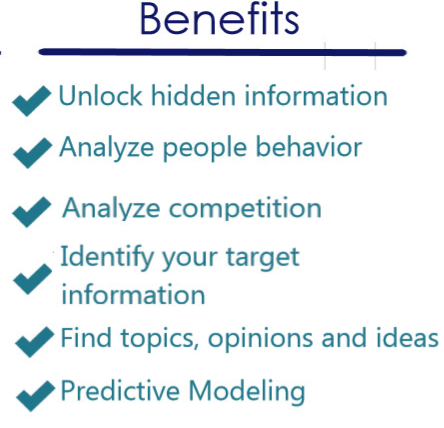
The benefits of biomedical text mining are nothing short of transformative. In an era where the volume of biomedical literature and healthcare data is overwhelming, this technology emerges as a guiding light. One of its primary advantages lies in its ability to accelerate the pace of scientific discovery. Researchers can now swiftly sift through vast databases of articles and research papers, extracting relevant insights and identifying trends that might have otherwise remained hidden. Moreover, biomedical text mining aids in drug discovery by analyzing scientific literature and identifying potential drug candidates, significantly shortening the development timeline. In clinical practice, it enhances evidence-based decision-making for healthcare providers, leading to more precise diagnoses and personalized treatment plans. Additionally, it plays a pivotal role in automating literature reviews, allowing experts to stay up-to-date with the latest research effortlessly. The benefits of biomedical text mining extend beyond efficiency; they hold the promise of advancing medical knowledge and improving patient care on a global scale.
Tools used in text mining:
Biomedical text mining relies on a sophisticated arsenal of methods and tools to navigate the intricate world of scientific literature and healthcare data. Natural Language Processing (NLP) stands as the cornerstone, enabling machines to understand, analyze, and extract valuable information from unstructured text. Named Entity Recognition (NER) is a vital component, as it identifies entities like genes, diseases, and drugs within text, facilitating data extraction. Text classification techniques, including machine learning algorithms, help categorize articles and papers into relevant topics, aiding in literature review automation. Furthermore, information retrieval methods, such as Boolean queries and relevance ranking, ensure that researchers can access pertinent articles swiftly. To harness the power of text mining, various software applications like PubTator, BioBERT, and GATE are employed, each tailored to specific biomedical tasks. These methods and tools collectively empower researchers, clinicians, and data scientists to unlock the wealth of knowledge buried within the vast sea of biomedical texts, revolutionizing healthcare and scientific discovery.
Applications:
Biomedical text mining has a wide range of applications that are transforming healthcare and biomedical research. Some key applications include:
- Disease Prediction and Surveillance: Text mining of medical records, clinical notes, and healthcare databases can assist in early disease detection, monitoring disease trends, and predicting disease outbreaks.
- Drug Discovery and Repurposing: By analyzing scientific literature and databases, text mining helps identify potential drug candidates, predict their effectiveness, and even repurpose existing drugs for new therapeutic uses.
- Literature Review Automation: Researchers can use text mining to automate the process of conducting literature reviews, making it faster and more comprehensive. This aids in staying up-to-date with the latest research.
- Biological Entity Recognition: Biomedical text mining tools can extract and categorize entities like genes, proteins, diseases, and drugs from scientific texts, facilitating data integration and analysis.
- Clinical Decision Support: Healthcare providers benefit from text mining by receiving real-time access to relevant clinical guidelines, research findings, and patient records, aiding in more informed decision-making.
- Semantic Search: Improved search engines and knowledge retrieval systems use text mining to provide more accurate and relevant results in response to medical queries.
- Pharmacovigilance: Identifying adverse drug reactions and monitoring drug safety is made more efficient with text mining, as it can quickly scan medical literature and adverse event reports.
- Personalized Medicine: Text mining helps in tailoring treatment plans by analyzing patient records and identifying the most effective therapies based on individual characteristics.
- Gene-Drug Interaction Discovery: Researchers can uncover associations between genes, drugs, and diseases through text mining, offering insights into personalized treatment options.
- Bioinformatics: Biologists and geneticists employ text mining to analyze and integrate information from a vast array of biological texts, aiding in genomics and proteomics research.
- Biomedical Ontology Development: Text mining assists in the creation and refinement of biomedical ontologies, which are essential for organizing and standardizing biomedical knowledge.
- Clinical Trial Matching: Patients can be matched with appropriate clinical trials more efficiently, improving patient recruitment and advancing clinical research.
- Quality Assurance and Compliance: Text mining helps ensure healthcare facilities and research institutions comply with regulatory standards by identifying inconsistencies and errors in documentation.
- Public Health Research: Researchers and epidemiologists use text mining to analyze public health data, track disease outbreaks, and formulate effective public health strategies.
These applications underscore the versatility and significance of biomedical text mining in advancing medical knowledge, improving patient care, and accelerating research breakthroughs.
Case studies regarding text mining:
Certainly, here are a few case studies illustrating the real-world impact of biomedical text mining:
1. Drug Repurposing for Alzheimer’s Disease: Researchers utilized biomedical text mining techniques to analyze a vast corpus of scientific literature and identify existing drugs with potential for repurposing in Alzheimer’s disease treatment. They discovered that a common anti-inflammatory medication, originally designed for a different purpose, showed promise in mitigating Alzheimer’s symptoms. This finding led to clinical trials, demonstrating the effectiveness of the repurposed drug in Alzheimer’s patients.
2. Cancer Biomarker Discovery: Biomedical text mining was employed to comb through extensive research articles and genetic databases. Researchers identified a specific gene associated with early-stage lung cancer that had previously gone unnoticed. This newly discovered biomarker enabled more accurate and earlier cancer detection, potentially saving lives through timely intervention.
3. Literature Review Automation in Precision Medicine: A pharmaceutical company faced the challenge of keeping up with the latest research on targeted therapies for cancer. By implementing automated literature review using text mining tools, they significantly accelerated the process of identifying relevant clinical trials, drug interactions, and patient cohorts. This led to faster drug development and more personalized treatment options for cancer patients.
4. Pharmacovigilance and Drug Safety Monitoring: A regulatory agency responsible for drug safety monitoring employed text mining algorithms to sift through a massive volume of adverse event reports and scientific literature. This approach enabled the rapid identification of potential safety concerns associated with certain medications, prompting timely regulatory actions and improved patient safety.
5. Infectious Disease Surveillance: Biomedical text mining played a crucial role in tracking the spread of infectious diseases. During a global pandemic, health agencies employed text mining to monitor news articles, social media, and medical reports, providing real-time insights into disease hotspots, transmission patterns, and public sentiment. This information guided public health interventions and resource allocation.
These case studies demonstrate how biomedical text mining has been instrumental in accelerating drug discovery, improving disease diagnosis, enhancing patient care, and responding to public health crises.
Ethical Considerations regarding text mining:
Ethical considerations in biomedical text mining are paramount, as this technology delves into sensitive healthcare data and scientific literature. One of the foremost concerns is patient privacy. Biomedical text mining often involves analyzing electronic health records and clinical notes, which contain personally identifiable information. Protecting patient confidentiality and complying with data protection regulations are essential to maintain trust and legality. Additionally, the potential biases inherent in the data and algorithms used must be addressed, as biased outputs could perpetuate disparities in healthcare. Transparency and accountability in algorithm development and decision-making processes are vital. Furthermore, ensuring that the benefits of text mining are equitably distributed and not used for exploitative purposes is essential. Ethical guidelines and oversight mechanisms must be in place to navigate the fine line between advancing research and respecting ethical principles, ultimately fostering responsible and ethical use of biomedical text mining in healthcare and research.
Conclusion:
In conclusion, biomedical text mining emerges as a formidable force poised to reshape the landscape of healthcare and scientific discovery. Through the lens of advanced natural language processing and data analytics, this technology empowers researchers, clinicians, and data scientists to extract invaluable insights from the vast corpus of biomedical literature and healthcare data. From accelerating drug discovery to enhancing patient care, the benefits are both profound and far-reaching. However, as we venture deeper into this transformative realm, ethical considerations stand as a guiding compass, ensuring that the power of text mining is harnessed responsibly and equitably. As we move forward, the fusion of cutting-edge technology and ethical stewardship promises a future where healthcare and research advance hand-in-hand, guided by the transformative potential of biomedical text mining. Join us on this journey towards a brighter and more informed future in the world of biomedicine.

 AI Hub
Leave a comment