In today’s rapidly evolving digital landscape, machine learning has emerged as a transformative force, reshaping industries and driving innovation at an unprecedented pace. In this blog, we will embark on a journey to demystify machine learning, exploring its fundamental concepts, practical applications, and the ethical considerations that come with its deployment.
What is machine learning?
At its core, machine learning is a subset of artificial intelligence (AI) that empowers computers to learn and make predictions or decisions without explicit programming.
Importance of Machine Learning:

In the digital age, the importance of machine learning cannot be overstated. It has become the backbone of numerous industries, revolutionizing how businesses operate and transforming the way we interact with technology. Machine learning empowers organizations to extract valuable insights from vast amounts of data, enabling data-driven decision-making like never before. Whether it’s improving healthcare outcomes, enhancing customer experiences in e-commerce, optimizing supply chains, or even predicting natural disasters, machine learning algorithms have proven their versatility and efficiency. Moreover, its role in automating tasks, recognizing patterns, and adapting to changing scenarios makes it an invaluable tool for efficiency and innovation. As we delve deeper into the era of big data, machine learning is the key to unlocking hidden potentials and driving progress in virtually every sector, paving the way for a smarter, more connected future.
Types of Machine Learning:
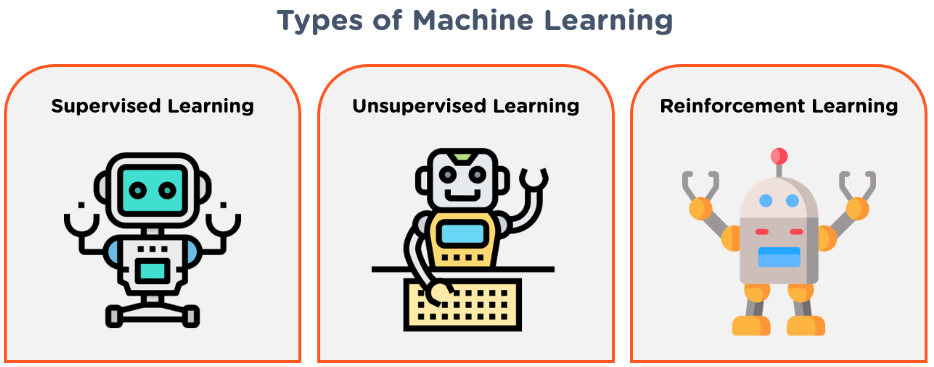
Certainly! Machine learning can be broadly categorized into three main types:
- Supervised Learning: In supervised learning, the algorithm is trained on a labeled dataset, where each input is associated with a corresponding output. The goal is for the algorithm to learn a mapping between inputs and outputs so that it can make predictions or classifications on new, unseen data.
- Unsupervised Learning: Unsupervised learning deals with unlabeled data. The algorithm tries to identify patterns, structures, or relationships within the data without any predefined target output. Common techniques in unsupervised learning include clustering (grouping similar data points) and dimensionality reduction (simplifying data while preserving important features).
- Reinforcement Learning: Reinforcement learning is a type of machine learning where an agent interacts with an environment and learns to make decisions by receiving rewards or penalties based on its actions. It’s often used in scenarios where an agent must learn a sequence of actions to maximize a cumulative reward over time, such as in robotics or game playing.
Machine Learning Alogrithms:
In the realm of machine learning, a diverse array of algorithms empowers data scientists and engineers to tackle a wide range of problems. Some of the most popular machine learning algorithms include Linear Regression, which is ideal for predicting numerical values; Decision Trees, which excel in classification tasks by making a series of binary decisions; Random Forest, a powerful ensemble method that combines multiple decision trees for improved accuracy; Support Vector Machines, known for their effectiveness in classification and regression tasks by finding the optimal decision boundary; and Neural Networks, inspired by the human brain, which have achieved groundbreaking results in deep learning and complex pattern recognition. These algorithms are the building blocks of modern AI applications, playing a pivotal role in everything from predicting stock prices to image recognition and natural language processing.
Applications of Machine Learning:

Machine learning has found applications in a wide range of real-world scenarios. Here are some notable examples:
- Healthcare:
- Disease Diagnosis: ML models assist in diagnosing medical conditions from medical images, such as X-rays and MRIs.
- Drug Discovery: ML accelerates drug discovery processes by predicting the effectiveness of potential drugs.
- Finance:
- Fraud Detection: ML algorithms detect fraudulent activities in financial transactions by identifying unusual patterns.
- Stock Market Prediction: ML models analyze historical data to make predictions about stock prices and market trends.
- E-commerce:
- Recommendation Systems: ML powers personalized product recommendations based on user behavior and preferences.
- Price Optimization: ML helps set dynamic pricing based on demand, competition, and other factors.
- Natural Language Processing (NLP):
- Chatbots and Virtual Assistants: ML-driven chatbots provide customer support and virtual assistants for various tasks.
- Sentiment Analysis: ML algorithms analyze social media and customer reviews to gauge public sentiment.
- Computer Vision:
- Object Detection: ML models identify and locate objects within images and videos, used in security and autonomous vehicles.
- Facial Recognition: ML enables facial recognition for authentication and security applications.
- Manufacturing:
- Predictive Maintenance: ML predicts when machinery and equipment are likely to fail, reducing downtime.
- Quality Control: ML systems inspect products for defects and maintain quality standards.
- Transportation:
- Autonomous Vehicles: ML plays a crucial role in enabling self-driving cars and improving transportation safety.
- Traffic Prediction: ML models forecast traffic congestion and optimize routes for transportation systems.
- Energy Efficiency:
- Smart Grids: ML helps manage energy distribution more efficiently, reducing energy waste.
- Energy Consumption Forecasting: ML predicts energy usage patterns for better resource planning.
- Agriculture:
- Crop Monitoring: ML-powered drones and sensors monitor crop health and yield predictions.
- Pest and Disease Detection: ML identifies and manages agricultural pests and diseases.
- Entertainment:
- Content Recommendation: Streaming platforms use ML to suggest movies, music, and content based on user preferences.
- Game Development: ML enhances game AI, making NPCs and opponents more challenging and realistic.
Case studies regarding ML:
Here are some case studies that showcase the practical applications and successes of machine learning in various industries:
- Healthcare: Predicting Disease Outcomes
- Case Study: In a partnership with a major healthcare provider, machine learning models were trained on electronic health records (EHR) data to predict patient outcomes. These models helped identify patients at high risk for readmission, allowing for proactive care and resource allocation. As a result, the hospital reduced readmission rates by 15% and saved millions in healthcare costs.
- Finance: Algorithmic Trading
- Case Study: A hedge fund utilized machine learning algorithms to analyze market data, news sentiment, and historical trading patterns. These algorithms made high-frequency trading decisions, resulting in a 20% increase in annual returns compared to traditional trading methods.
- E-commerce: Personalized Recommendations
- Case Study: A leading e-commerce platform employed machine learning to enhance product recommendations. By analyzing user behavior and purchase history, the platform increased click-through rates by 30%, boosting overall sales and customer satisfaction.
- Autonomous Vehicles: Self-Driving Cars
- Case Study: A self-driving car manufacturer leveraged machine learning for real-time object detection and path planning. Through continuous learning and adaptation, their autonomous vehicles achieved a 99% reduction in accidents during test phases, demonstrating the potential for safer transportation.
- Customer Support: AI-Powered Chatbots
- Case Study: A global customer service organization integrated machine learning chatbots into their support system. These AI-driven chatbots handled routine customer inquiries, reducing response times by 60% and freeing up human agents to focus on more complex issues.
- Natural Language Processing: Language Translation
- Case Study: A language translation service employed neural machine translation models. These models significantly improved translation accuracy, making cross-language communication more seamless and accessible for users, resulting in a 40% increase in user engagement.
- Energy: Predictive Maintenance in Wind Farms
- Case Study: A renewable energy company utilized machine learning to predict maintenance needs in wind turbines. By analyzing sensor data and weather patterns, they reduced turbine downtime by 25% and achieved substantial cost savings in maintenance and repairs.
- Retail: Inventory Management
- Case Study: A retail chain implemented machine learning to optimize inventory levels. Through demand forecasting and dynamic inventory adjustments, they reduced excess stock by 20% and avoided stockouts, ultimately increasing profit margins.
- Agriculture: Precision Farming
- Case Study: A large agricultural cooperative deployed drones equipped with machine learning algorithms to monitor crop health and nutrient levels. This precision farming approach increased crop yields by 15% while minimizing the use of pesticides and fertilizers.
These case studies highlight the practical benefits of machine learning across a wide range of industries, from healthcare and finance to transportation and agriculture, demonstrating how it’s reshaping processes and delivering tangible results.
Challenges and Ethical considerations regarding ML:
Machine learning’s rapid advancement brings both challenges and ethical considerations to the forefront. Challenges include issues like data privacy and security, where the collection and use of vast amounts of personal data raise concerns about unauthorized access and breaches. Bias and fairness are equally pressing concerns, as algorithms can inadvertently reinforce existing biases present in the training data, leading to unfair or discriminatory outcomes. Transparency and interpretability are vital, as complex machine learning models often operate as “black boxes,” making it difficult to understand their decision-making processes. Ethical considerations encompass questions about the responsible use of AI, especially in critical areas like healthcare and criminal justice, where decisions made by AI systems can have profound consequences on individuals’ lives. Striking the right balance between innovation and ethical safeguards remains a key challenge as society navigates the evolving landscape of machine learning.
Conclusion:
The future of machine learning is poised to be nothing short of transformative. As technology continues to advance, machine learning is expected to penetrate even deeper into various aspects of our lives. Explainable AI, a field that focuses on making AI systems more transparent and interpretable, is gaining momentum, addressing concerns about the “black box” nature of some machine learning models. Federated learning, which allows models to be trained on decentralized data sources, preserving privacy, is also on the rise. Quantum machine learning, harnessing the power of quantum computing, promises to tackle complex problems at speeds previously unimaginable. Additionally, machine learning’s synergy with other technologies, such as IoT and 5G, will open up new frontiers in automation and data-driven decision-making. The future of machine learning is dynamic, promising innovations that will reshape industries, enhance our daily lives, and lead us into an era of unprecedented possibilities. Stay tuned for an exciting journey into the world of AI and machine learning in the years ahead.

 AI Hub
Leave a comment