Introduction:
In an era where the digital landscape thrives on conversations, opinions, and emotions, understanding how people feel has never been more crucial. Welcome to our journey through the fascinating world of sentiment analysis, a powerful tool that deciphers the sentiments expressed in text data, providing insights into the collective human psyche. As the virtual realm continues to expand exponentially, businesses, governments, and individuals are seeking ways to harness the valuable information concealed within the vast troves of online content. In this blog, we embark on an exploration of sentiment analysis, unraveling its inner workings, unveiling its myriad applications, and delving into the transformative benefits it offers. Whether you’re a marketer aiming to enhance your campaign strategies, a brand manager keen on maintaining a sterling reputation, or simply a curious mind intrigued by the intersection of technology and human emotion, join us as we decipher the sentiment beneath the surface of text, one word at a time.
what is sentiment analysis?
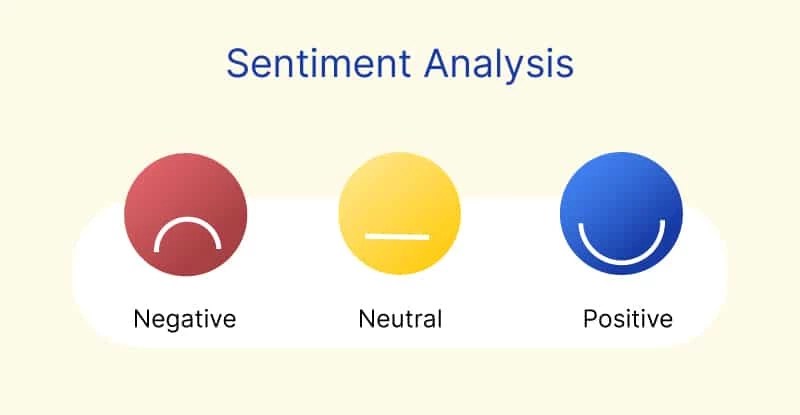
Sentiment analysis, also known as opinion mining, is a natural language processing (NLP) technique that involves the use of computational methods to determine and understand the emotional tone, opinions, attitudes, and sentiments expressed in text data. The primary goal of sentiment analysis is to classify a piece of text (such as a review, comment, or social media post) as positive, negative, or neutral, and sometimes further categorize the sentiment into more specific emotions like happiness, anger, sadness, or surprise.
Sentiment analysis can be applied to various types of textual data, including social media posts, customer reviews, news articles, surveys, and more. It is a valuable tool for businesses, researchers, and organizations because it allows them to gain insights into public opinion, customer feedback, and brand perception.
Here’s a basic overview of how sentiment analysis works:
- Data Collection: Gather text data from various sources, such as social media platforms, websites, or customer feedback forms.
- Text Preprocessing: Clean and prepare the text data for analysis by removing irrelevant information, punctuation, special characters, and stopwords (common words like “and,” “the,” “is,” etc.).
- Sentiment Classification: Use machine learning algorithms or pre-trained models to analyze the text and classify it into different sentiment categories (positive, negative, neutral) based on the words and phrases used, as well as the overall context.
- Sentiment Score: Assign a sentiment score to the text, indicating the strength of the sentiment expressed. For example, a strongly positive statement might have a higher score than a mildly positive one.
- Visualization and Interpretation: Present the sentiment analysis results through charts, graphs, or reports, allowing stakeholders to understand the sentiment trends and make data-driven decisions.
Importance of Sentiment Analysis:

Sentiment analysis holds significant importance in today’s data-driven world for several compelling reasons:
- Customer Understanding: Businesses can gain deep insights into customer sentiments and opinions. By analyzing customer feedback, reviews, and social media comments, companies can understand what their customers like or dislike about their products and services. This information is invaluable for making data-driven decisions to enhance offerings and improve customer satisfaction.
- Brand Reputation Management: Sentiment analysis helps organizations monitor their brand reputation in real-time. Detecting negative sentiments early allows them to address issues promptly, mitigate crises, and protect their brand image.
- Competitive Analysis: By analyzing sentiment around their competitors, companies can gain a competitive edge. They can identify gaps in the market, areas where competitors excel, and opportunities to differentiate themselves.
- Product Development: Sentiment analysis provides valuable feedback for product development. It helps in fine-tuning existing products or services and identifying unmet customer needs, leading to the creation of products that better align with market preferences.
- Marketing Strategy: Marketers use sentiment analysis to evaluate the effectiveness of their campaigns. It allows them to gauge public reaction to advertisements, content, and promotions, enabling adjustments for improved engagement and conversion rates.
- Customer Support: Sentiment analysis can be integrated into customer support systems to identify and prioritize customer issues based on the sentiment expressed in their messages. This ensures more efficient and personalized support.
- Financial Markets: Sentiment analysis is used in financial markets to gauge investor sentiment, helping traders and investors make informed decisions. It can detect trends and market sentiment shifts early, potentially mitigating financial risks.
- Political and Public Opinion Analysis: Governments and political campaigns analyze sentiment to understand public opinion on policies, candidates, and issues. This insight can guide political strategies and policy decisions.
- Crisis Detection and Management: Sentiment analysis can detect early warning signs of potential crises, such as safety concerns, product defects, or negative media coverage. Rapid response based on sentiment analysis can minimize damage.
- Healthcare and Patient Feedback: In the healthcare sector, sentiment analysis can be used to assess patient feedback and experiences. Hospitals and healthcare providers can identify areas for improvement in patient care and service quality.
Benefits of Sentiment Analysis:
Implementing sentiment analysis in your business or organization can yield a myriad of transformative advantages. First and foremost, it empowers data-driven decision-making. By mining and deciphering sentiments from customer reviews, social media conversations, or market research, you gain valuable insights that inform strategic choices. This leads to more precisely targeted marketing campaigns, enhanced product development, and improved customer satisfaction. Sentiment analysis also offers a competitive edge by keeping you attuned to market sentiment, enabling you to adapt swiftly to changing trends or address issues before they escalate. Furthermore, it’s a potent tool for risk mitigation, as it can identify potential crises and negative sentiments early, allowing for proactive crisis management. Ultimately, sentiment analysis isn’t just about data; it’s about creating personalized, customer-centric experiences, fostering brand loyalty, and positioning your organization for sustained success in today’s data-centric landscape.
Real-world examples of Sentiment Analysis:
Certainly, here are some real-world examples of successful sentiment analysis implementations across various industries:
- Social Media Management: Companies like Hootsuite and Sprout Social use sentiment analysis to help businesses monitor and manage their social media presence effectively. By analyzing comments, tweets, and posts, these tools can identify trends, customer sentiment, and potential crises, allowing businesses to respond promptly and engage with their audience more effectively.
- Customer Service: Many customer service centers employ sentiment analysis to gauge customer satisfaction and identify issues in real-time. For example, airlines often use sentiment analysis on customer feedback to improve their services and resolve issues more efficiently.
- Movie and Entertainment Industry: Hollywood studios and film distributors use sentiment analysis to gauge audience reactions to movies. By analyzing social media conversations, reviews, and mentions, they can fine-tune their marketing strategies and understand which aspects of a film resonate most with viewers.
- Political Campaigns: Politicians and political campaigns leverage sentiment analysis to understand public sentiment and opinion. During election campaigns, sentiment analysis of social media posts and news articles helps candidates tailor their messages and strategies to address voter concerns effectively.
- Finance and Investment: Hedge funds and financial institutions use sentiment analysis to analyze news articles, social media trends, and earnings call transcripts. By tracking sentiment in financial markets, they can make more informed investment decisions and manage risks more effectively.
- Product Development: Companies like Procter & Gamble and Ford use sentiment analysis to gather feedback on their products. By analyzing customer reviews and social media discussions, they can identify areas for improvement and develop new products that align with customer preferences.
- Healthcare: Healthcare providers and pharmaceutical companies employ sentiment analysis to understand patient experiences and opinions. This helps them improve patient care, identify potential issues in healthcare facilities, and develop more patient-centric solutions.
- News Media: News outlets use sentiment analysis to gauge public reactions to news stories. By monitoring social media and comments sections, they can identify which stories resonate most with their audience and adjust their editorial strategies accordingly.
- Tourism and Hospitality: Hotels and travel agencies use sentiment analysis to analyze customer reviews and feedback. This information helps them improve guest
Future Trends in Sentiment Analysis:
As technology continues to advance at an unprecedented pace, the future of sentiment analysis promises even more exciting developments. Artificial intelligence (AI) and machine learning algorithms will become more sophisticated, enabling sentiment analysis systems to understand context and nuanced emotions better. Multimodal sentiment analysis, which combines text, images, and audio data, will gain prominence, allowing for a more comprehensive understanding of sentiment. Ethical considerations and regulation in sentiment analysis will likely become more prominent as concerns over privacy and bias grow, leading to the development of more transparent and ethical sentiment analysis practices. Additionally, sentiment analysis will increasingly integrate with chatbots and virtual assistants, making human-computer interactions more emotionally intelligent. With these trends on the horizon, businesses and organizations that embrace sentiment analysis will be better equipped to navigate the evolving digital landscape, enhance customer experiences, and make data-driven decisions that drive success. Stay tuned for these exciting developments in the world of sentiment analysis.
Conclusion:
In a world awash with data and opinions, sentiment analysis emerges as a guiding light, illuminating the path to deeper insights, informed decisions, and enhanced experiences. From deciphering the whims of consumers to safeguarding brand reputations, sentiment analysis has proven its worth across diverse domains. As we glimpse into the future, the promise of more advanced AI, ethical considerations, and innovative applications beckon. The journey through sentiment analysis, as explored in this blog, underscores its pivotal role in our data-driven era. Embracing sentiment analysis isn’t merely an option; it’s an imperative for those seeking to thrive in an increasingly interconnected and emotionally nuanced world. So, whether you’re a marketer shaping campaigns, a business honing products, or an analyst discerning the pulse of public opinion, sentiment analysis stands ready to be your trusted companion on this ever-evolving journey.

 AI Hub
Leave a comment