
Introduction:
In the ever-evolving landscape of online entrepreneurship, affiliate marketing stands out as a tried-and-true method for individuals to generate passive income. Whether you’re a seasoned digital marketer or a newcomer to the online business world, affiliate marketing offers a scalable and lucrative opportunity to earn money. In this blog post, we’ll explore the fundamentals of affiliate marketing, tips for success, and how you can leverage this powerful strategy to boost your income.
- Understanding Affiliate Marketing:
Affiliate marketing is a performance-based model where individuals, known as affiliates, earn a commission for promoting other people’s products or services. The process is simple: affiliates promote a product, and when a sale is made through their unique affiliate link, they earn a commission. This low-risk, high-reward model has made affiliate marketing a go-to choice for those seeking to monetize their online presence.
- Choosing Profitable Niches:
Selecting the right niche is crucial for affiliate marketing success. Focus on niches that align with your interests and have a broad audience appeal. Popular niches include health and wellness, personal finance, technology, and lifestyle. Conduct thorough market research to identify trends and potential gaps in the market, giving you a competitive edge.
- Building a Trustworthy Platform:
Whether you have a blog, YouTube channel, or social media presence, establishing trust with your audience is paramount. Provide valuable and authentic content that addresses your audience’s needs and concerns. As an affiliate, your recommendations carry weight when your audience believes in your credibility and expertise.
- Researching and Choosing Products:
Carefully research and select affiliate products that align with your niche and audience. Choose products or services that you genuinely believe in, as your authenticity will resonate with your audience. Look for reputable affiliate programs with competitive commissions, reliable tracking, and a solid reputation.
- Creating Compelling Content:
Crafting engaging content is the key to driving traffic and conversions. Incorporate your affiliate links naturally within your content, ensuring they add value to your audience. Use a variety of content formats, such as blog posts, videos, and social media updates, to diversify your approach and reach a broader audience.
- Optimizing for SEO:
Implementing search engine optimization (SEO) strategies is crucial to increasing the visibility of your affiliate content. Conduct keyword research to identify relevant and high-volume search terms within your niche. Incorporate these keywords naturally into your content, headings, and meta tags to improve your chances of ranking higher on search engine results pages (SERPs).
- Leveraging Social Media:
Social media platforms are powerful tools for promoting affiliate products. Build a strong social media presence by engaging with your audience, sharing valuable content, and strategically incorporating affiliate promotions. Use visually appealing images and persuasive captions to encourage clicks on your affiliate links.
- Analyzing and Adjusting:
Regularly analyze the performance of your affiliate marketing efforts using analytics tools. Track key metrics such as click-through rates, conversion rates, and earnings. Identify high-performing strategies and products, and adjust your approach accordingly. Continuous optimization is essential for long-term success in affiliate marketing.
Types Of Affiliates:
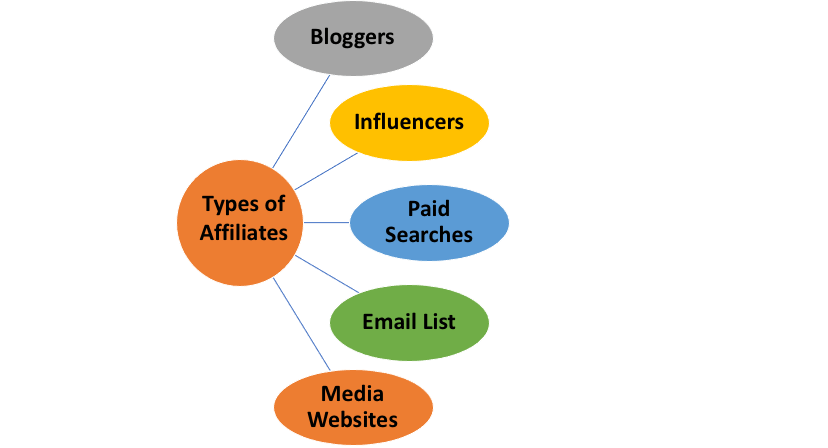
Affiliates in the realm of affiliate marketing can be broadly categorized into three main types based on their promotional methods and approaches. These types are:
- Content Creators (Bloggers, YouTubers, Podcasters):
- Description: Content creators are individuals who produce valuable content on platforms like blogs, YouTube, podcasts, or other mediums. They leverage their authority, expertise, or entertainment value to attract and engage an audience.
- Promotion Method: Content affiliates often integrate affiliate links naturally into their content. This could include product reviews, how-to guides, or recommendations within blog posts, videos, or podcast episodes.
- Strengths: Trust-building through in-depth content, the potential for evergreen content that continues to attract visitors over time.
- Social Media Influencers:
- Description: Social media influencers have a substantial following on platforms like Instagram, Twitter, Facebook, or TikTok. They are known for their ability to influence their audience’s opinions and purchasing decisions.
- Promotion Method: Influencers use their social media platforms to showcase products or services, often with visually appealing content. Affiliate links may be included in captions or bio sections.
- Strengths: Quick and direct engagement, potential for viral content, and the ability to reach a vast audience.
3. Coupon and Deal Sites:
- Description: Coupon and deal affiliates focus on providing discounts, deals, and promotional offers to their audience. Users often visit these sites specifically to find discounts on products or services.
- Promotion Method: These affiliates promote products by highlighting special offers, discounts, and coupon codes. Users click on the affiliate link to access the deal.
- Strengths: Appeals to cost-conscious consumers, drives immediate action, and can be effective for time-sensitive promotions.
Each type of affiliate brings its unique strengths to the table, and successful affiliate marketing strategies often involve a combination of these types. The key is to align the affiliate type with the target audience and the nature of the promoted products or services. Successful affiliate programs may involve collaborations with affiliates from different categories to maximize reach and effectiveness.
Certainly! Let’s delve deeper into the world of affiliate marketing to provide a more comprehensive understanding:
1. Affiliate Marketing Basics:
- Parties Involved:
- Merchant or Vendor: The creator or seller of the product or service.
- Affiliate: The individual or entity promoting the product for a commission.
- Consumer: The person who makes a purchase through the affiliate link.
- Commission Structures:
- Percentage-based: Affiliates earn a percentage of the sale.
- Fixed amount: Affiliates receive a fixed commission per sale.
- Pay-per-click (PPC): Affiliates earn a fee for each click on their affiliate link.
- Pay-per-lead (PPL): Affiliates are paid based on leads generated.
2. How Affiliate Marketing Works:
- Affiliate Links: Affiliates use unique tracking links provided by the merchant to promote products. These links help attribute sales to specific affiliates.
- Cookies and Tracking: Cookies are used to track a user’s journey from the affiliate’s marketing channel to the merchant’s site. This tracking period can vary but is typically 30 to 90 days.
- Conversion Attribution: The last click often gets credit for a sale, but some programs use multi-touch attribution, giving credit to various touchpoints in the customer journey.
3. Benefits of Affiliate Marketing:
- Low Risk: Affiliates bear minimal financial risk as they don’t need to create a product or handle inventory.
- Passive Income: Once set up, affiliate links can generate income passively as long as they continue to drive sales or leads.
- Global Reach: Affiliates can promote products to a global audience, leveraging the power of the internet.
4. Affiliate Marketing Strategies:
- Content Marketing: Creating valuable content, such as blog posts, reviews, or videos, to educate and inform the audience about the promoted products.
- Email Marketing: Building and nurturing an email list to send targeted promotions and product recommendations.
- Social Media Marketing: Leveraging social platforms to showcase products and engage with the audience.
- SEO Optimization: Optimizing content for search engines to attract organic traffic and improve visibility.
5. Challenges and Considerations:
- Competition: Depending on the niche, affiliate marketing can be highly competitive, requiring unique strategies to stand out.
- Trust Building: Success hinges on building trust with your audience. Promoting products without credibility can harm your reputation.
- Policy Adherence: Abiding by the terms and conditions of affiliate programs is crucial to maintaining a positive relationship with merchants.
6. Choosing Affiliate Programs:
- Reputation: Opt for programs with a good reputation for timely payments and fair commission structures.
- Product Quality: Promote products or services that align with your brand and have positive reviews.
- Support and Resources: Look for programs that offer support, marketing materials, and resources to help you succeed.
7. Future Trends in Affiliate Marketing:
- Influencer Marketing: The rise of influencers has brought a new dimension to affiliate marketing.
- Video Content: Video platforms are becoming popular for affiliate promotions.
- Voice Search Optimization: As voice-activated devices gain traction, optimizing for voice search becomes crucial.
8. Legal and Ethical Considerations:
- Disclosure: Many jurisdictions require affiliates to disclose their relationship with merchants to their audience.
- Compliance: Adhering to privacy and data protection laws is essential.
- Ethical Marketing: Building a sustainable affiliate business involves ethical promotion and honest reviews.
How do I earn in affiliate marketing?
Earning in affiliate marketing involves strategically promoting products or services and earning a commission for every sale, lead, or click generated through your unique affiliate link. Here’s a step-by-step guide on how to earn in affiliate marketing:
- Choose a Niche:
- Select a niche that aligns with your interests, expertise, and the needs of your target audience. It’s essential to focus on a niche where you can provide valuable and relevant content.
- Research Affiliate Programs:
- Identify reputable affiliate programs within your chosen niche. Look for programs that offer competitive commissions, reliable tracking, and a good reputation. Many companies and e-commerce platforms have their affiliate programs.
- Join Affiliate Programs:
- Apply to join affiliate programs relevant to your niche. Upon approval, you’ll gain access to unique affiliate links and promotional materials.
- Build an Online Presence:
- Establish a platform where you can promote affiliate products. This could be a blog, YouTube channel, social media profiles, or a combination of these. Focus on building a strong, authentic online presence.
- Create Quality Content:
- Produce high-quality content that adds value to your audience. This could include product reviews, tutorials, guides, or other content that showcases the benefits of the products you’re promoting.
- Incorporate Affiliate Links Naturally:
- Integrate your affiliate links naturally into your content. Avoid being overly promotional; instead, focus on providing information and solutions. Disclose your affiliate relationships transparently to build trust with your audience.
- Optimize for SEO:
- Implement search engine optimization (SEO) strategies to improve the visibility of your content on search engines. This can help attract organic traffic and increase the chances of earning through affiliate links.
- Engage on Social Media:
- Leverage social media platforms to reach a wider audience. Share your content, engage with your followers, and use social media channels to promote affiliate products.
- Build an Email List:
- Create and grow an email list to connect directly with your audience. Send newsletters, updates, and promotional offers, including your affiliate links when relevant.
- Track and Analyze Performance:
- Use analytics tools to track the performance of your affiliate marketing efforts. Monitor metrics such as click-through rates, conversion rates, and earnings. Identify what strategies and products are performing well.
- Optimize and Iterate:
- Regularly optimize your approach based on performance data. Adjust your content, promotional methods, and product selection to maximize your earnings. Stay informed about industry trends and adapt your strategies accordingly.
- Explore Different Affiliate Types:
- Consider diversifying your approach by exploring different types of affiliates, such as content creation, social media influence, or coupon and deal promotions.
Remember, success in affiliate marketing takes time and persistence. Building trust with your audience and consistently providing value are crucial elements of a sustainable and profitable affiliate marketing strategy. Additionally, staying informed about industry trends and adapting to changes will contribute to your long-term success in the affiliate marketing space.
Conclusion:
Affiliate marketing offers a pathway to financial freedom for those willing to invest time and effort. By choosing the right niche, building a trustworthy platform, and optimizing your content for SEO, you can unlock the full potential of affiliate marketing and create a sustainable source of income. Stay committed, adapt to industry trends, and watch as your affiliate marketing endeavors pave the way for a rewarding online business journey.

 AI Hub
Leave a comment